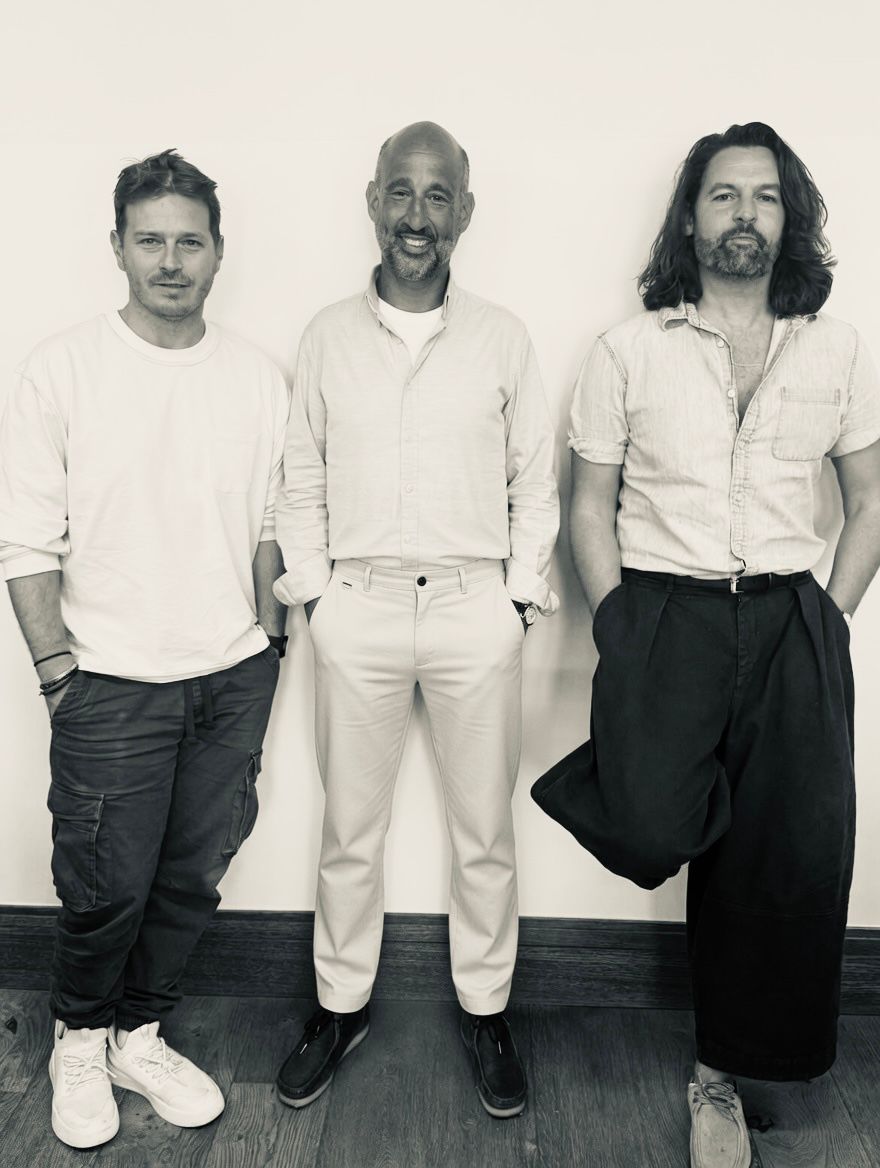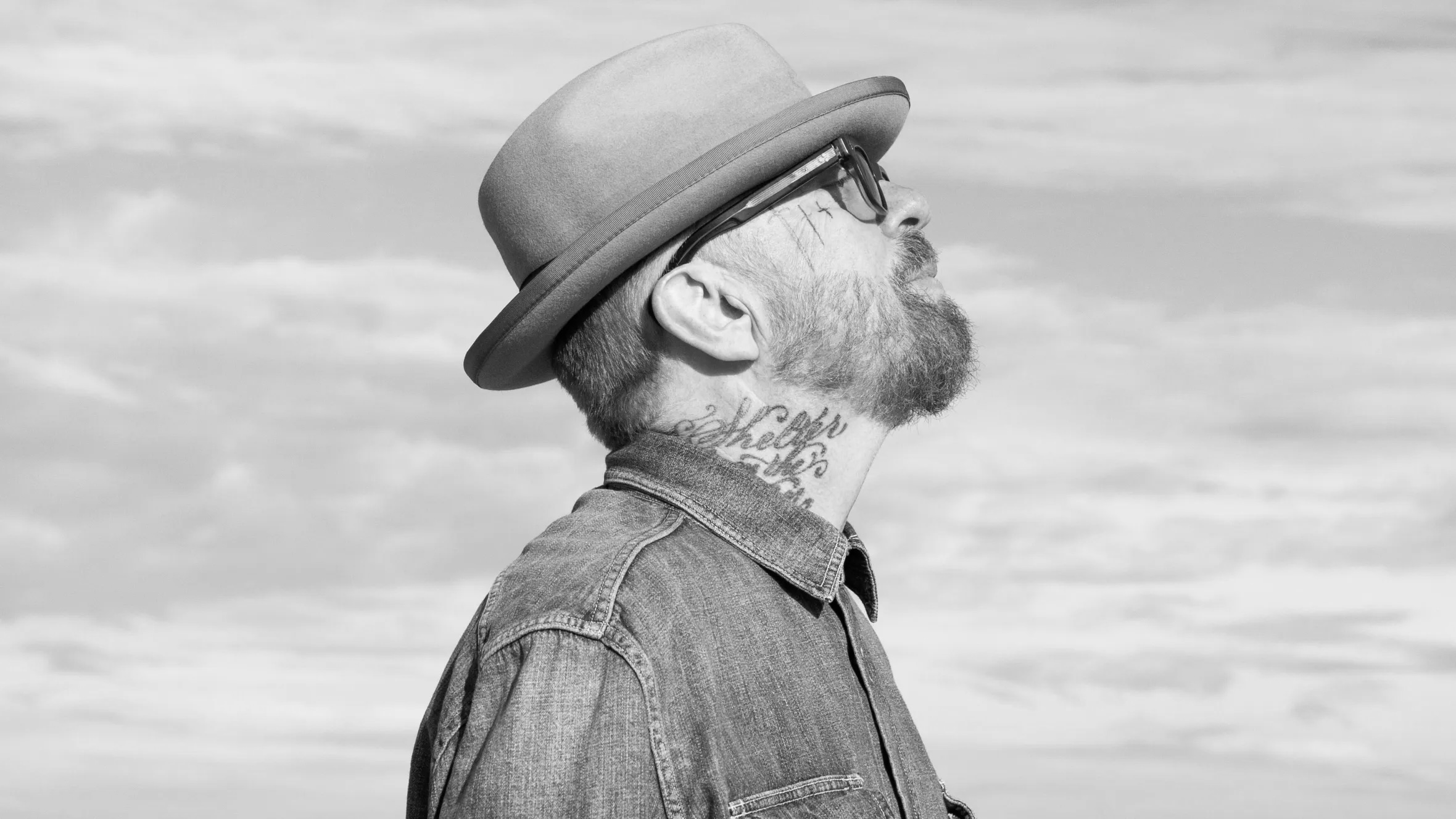

Dave learned to play guitar the wrong way. Twice.
First on his brother's guitar, which was out of tune and missing a string. Then from a neighbour who'd learned to play in a Japanese prisoner of war camp and attacked the thing like a banjo. So Dave spent his formative years getting quite good at an instrument that technically didn't exist. It took a mate coming back from college, hearing the racket, and re-tuning everything before he could actually start.
Most people would file those years under wasted time. Dave files them under the foundation of everything. The mislearning, the borrowed gear, the £5,000 loan from a bank manager in Crouch End that helped launch Eurythmics. When he tells these stories, and he tells them brilliantly, usually with a detail that shouldn't be true but is, the theme never changes. The accidents made him.
Which is exactly what the AI conversation keeps getting wrong.
The pitch for AI in creativity is basically friction removal. Faster, cheaper, more. Kill the production bottleneck, drop the barrier to entry, generate at scale. And fair enough, some of that is real. At Rare we use these tools every single day. I'm not writing this on a typewriter.
But spend an hour listening to Dave and you notice something. Every breakthrough in his career came from inside the friction. None came from removing it.
He and Annie made Sweet Dreams in a squat above a record shop. They went to work with Conny Plank, a producer who built his own mixing desk and operated out of a farmhouse in the middle of nowhere near Cologne. Hardly the efficient choice. But Plank gave them the most valuable lesson of their careers: there are no rules. Mic the drums from six feet away. Stick a microphone down a well. Turn the gain up until the desk complains. Try anything.
You cannot prompt your way to that lesson. It was earned in a room, with a specific eccentric, doing things wrong on purpose.
And here's the thing about doing it wrong. When a machine makes a mistake, it's just an error. Six fingers on a hand, a chorus that almost rhymes. There's no story behind it, so there's nothing to forgive and nothing to love. When a human makes a mistake, it can become the best part. The crack in the voice. The drummer rushing the chorus because the room was up. Dave mastering a guitar with five strings. Perfection is hard to love. What we actually connect with is someone reaching for something and nearly getting there, because that's what our own lives look like. Fallibility is the thing that lets us see ourselves in the work. A flawless output from a machine impresses you for about four seconds. A flawed attempt from a person can stay with you for thirty years.
You can see people voting with their feet on this. The more synthetic and frictionless the feed gets, the harder people chase the real thing. Gigs, festivals, supper clubs, vinyl, anything with a queue and a cloakroom. Nobody has ever left a show raving about how flawless it was. They talk about the moment it nearly fell apart, the thing the artist said between songs, the stranger next to them who knew every word. People are craving rooms, sweat, eye contact, the risk that tonight might be different from last night. The odds of the evening going slightly wrong are precisely what makes it worth leaving the house for.
Now, the standard worry is that AI replaces artists. I don't buy it. Audiences know the difference between content and culture. They can feel when something was made by a person who has lived, versus generated by a system that has processed. That instinct isn't going anywhere.
The risk I actually worry about is quieter. AI could seduce the next generation of artists into skipping the adventures. The squat, the farmhouse, the wrong teachers, the bank manager. All the mess that makes the work mean something, skipped at precisely the moment the world is starving for depth.
Dave puts it better than I can: "Typing a prompt into AI to make a song is not the same as going through all those adventures. You miss out on life."
He's right. And if artists miss out on life, audiences eventually miss out on art that means anything.
This is also why taste is about to become the most valuable skill in the creative economy. When anyone can generate anything, the person who knows what's actually good becomes the whole game. Taste can't be downloaded. It's built the same way Dave built his: years of listening, rooms full of people better than you, a thousand small judgements about what to keep and what to bin. The tastemakers, the people who can stand in front of infinite options and say "that one", are about to matter more than they ever have.
So the question I keep pushing at Rare is less about what we can automate and more about what we should protect. Our bet is specific. In a world of infinite content, the scarcest asset is real creative authority. Taste built over decades. Cultural understanding you can't scrape. Instinct forged in particular rooms, at particular moments, with particular people.
Roy Orbison was in Dave's garden. Conny Plank played alchemist in a German farmhouse. A bank manager in Crouch End made a lending decision that funded one of the most iconic records in British music history. None of that had a workflow. None of it scaled. All of it was irreplaceable.
The creative businesses that matter over the next decade won't be the ones generating the most. They'll be the ones built on that kind of depth, and smart enough to use AI to amplify it without hollowing it out.
AI democratises creation, and that's worth celebrating. Culture is a different animal. Culture is earned. It belongs to the people who showed up, made the mistakes, found the collaborators, learned the wrong way a couple of times, and kept going anyway.
Those are the people we back.
_
By Dom Joseph, Co-Founder, Rare Entity